







The summer between high school and college, I bought a used car. Living on campus wasn’t in the budget, so the car was how I’d get to school. Three days after I bought it, it started pouring black smoke out the back.
I couldn’t afford another car. So I did the only thing I could afford: I bought a Haynes repair manual, taught myself how the engine came apart, and rebuilt it. It ran. I drove it to school.
I’ve done most of the maintenance on my own vehicles ever since. That one breakdown turned into a forty-year habit.
The problem wasn’t the wrenching. It was the tracking.
Fast-forward to today. I’m semi-retired, doing some part-time consulting through McGlyn Consulting after 25+ years in cybersecurity — I retired from Deloitte as the Global Leader for Cybersecurity Architecture, covering all ~425,000 of the firm’s people. Before that I ran security at CableLabs and was CISO at Qwest/CenturyLink. And long before any of that, I started my career as a petroleum engineer at Mobil Oil — I’ve been a licensed Professional Engineer in Colorado since 1992.
So I’m comfortable with complex systems. But nothing prepared me for the logistics of maintaining a small fleet.
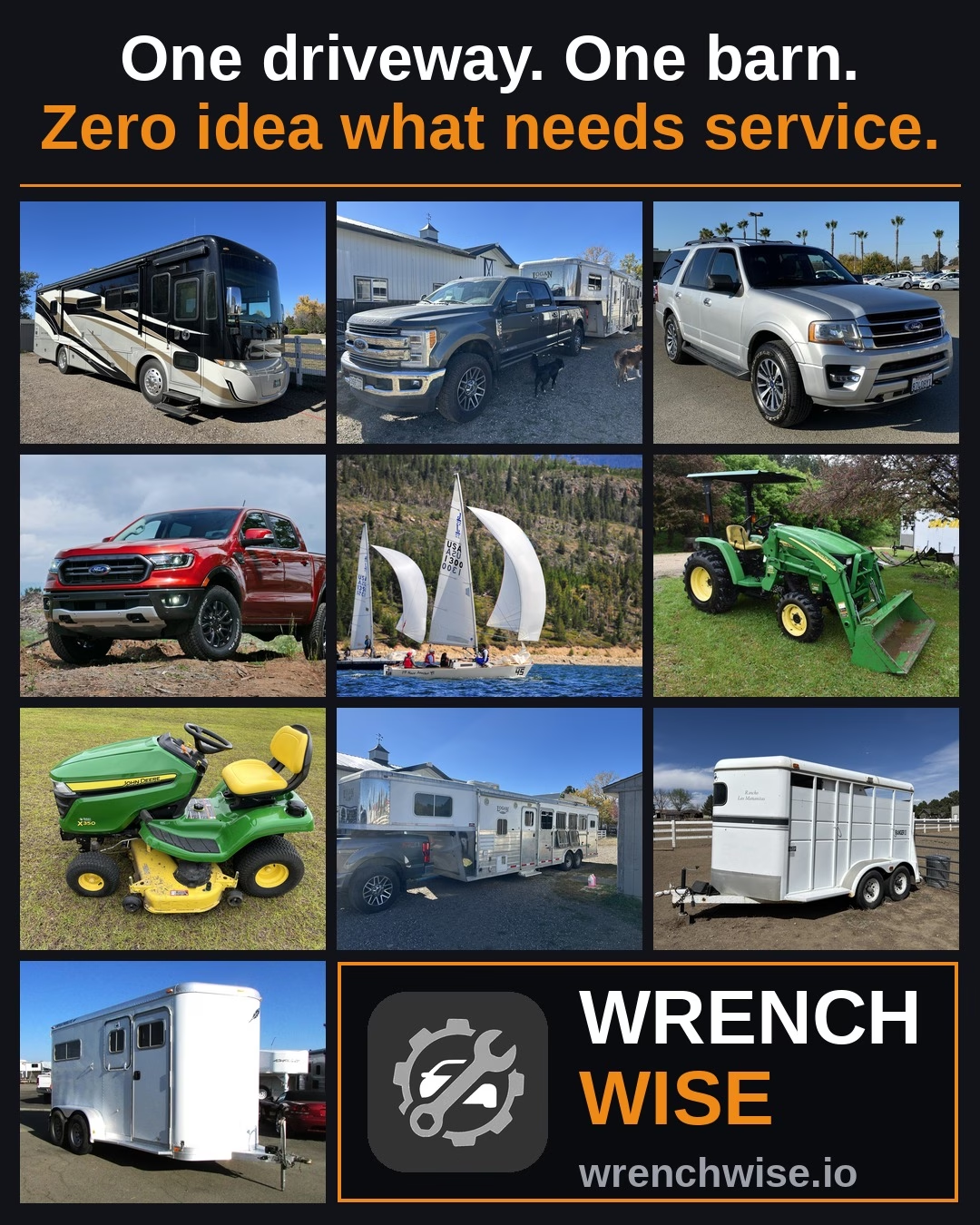
It started when we bought a Class A motorhome from my son. If you’ve never owned one: an RV isn’t a vehicle, it’s three vehicles wearing a trenchcoat. There’s the chassis and engine. There’s the generator, on its own hour-based schedule. There’s the house — water systems, slide-outs, seals, batteries. Everything is on a different calendar, and missing something doesn’t mean an inconvenience, it means a four-figure repair.
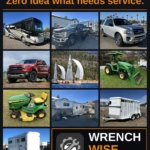
Then I looked at everything else in the driveway and the barn:
- A Ford F350
- A Ford Ranger
- A Ford Expedition
- A John Deere compact tractor
- A John Deere riding mower
- A sailboat — and its trailer
- And three horse trailers
Every one of those has maintenance needs. Oil, filters, fluids, bearings, brakes, seasonal layup, tires that age out whether you drive on them or not. I was the guy who could rebuild an engine, and I was still losing track of what needed servicing and when.
I tried the apps. None of them fit.
I did what everyone does first — I went looking for software. There are vehicle-maintenance apps out there, and I tried them. They were built for someone with one or two cars and a simple oil-change cadence. None of them understood a fleet. None of them understood an RV’s split personality, or a tractor measured in engine hours, or a horse trailer that mostly needs its bearings and floor watched.
None of them did what I actually wanted.
So I decided to build it myself.
That’s a sentence that’s easy to write and terrifying to act on. Because here’s the part I haven’t mentioned: I’m not a software developer.
Over the years I’ve touched a lot of languages — C, C++, Java, Perl, a little Python, some Fortran, Oracle databases. Enough to be dangerous. But I’ll say it plainly: I was never a good programmer. I’m an engineer and a security leader, not a software engineer.
What I am is stubborn, and curious. The same instinct that made me buy a Haynes manual instead of giving up on that smoking car made me wonder: could AI help me build the thing I couldn’t find?
That question turned into Wrench Wise — and into a nine-month, nearly-4,000-commit education in what it actually takes to ship real software when you’re not a real software developer.
That’s the story I’m going to tell in this series: the false starts, the funny disasters, the tools, the lessons, and the surprisingly hard parts (naming it was harder than I expected, and don’t get me started on advertising). Some of it is educational. A lot of it is just entertaining in hindsight.
Next up: how a guy who “was never a really good programmer” started building a real app — and the first tool that made it feel possible.
Stick around. 🔧